
Shotcreting
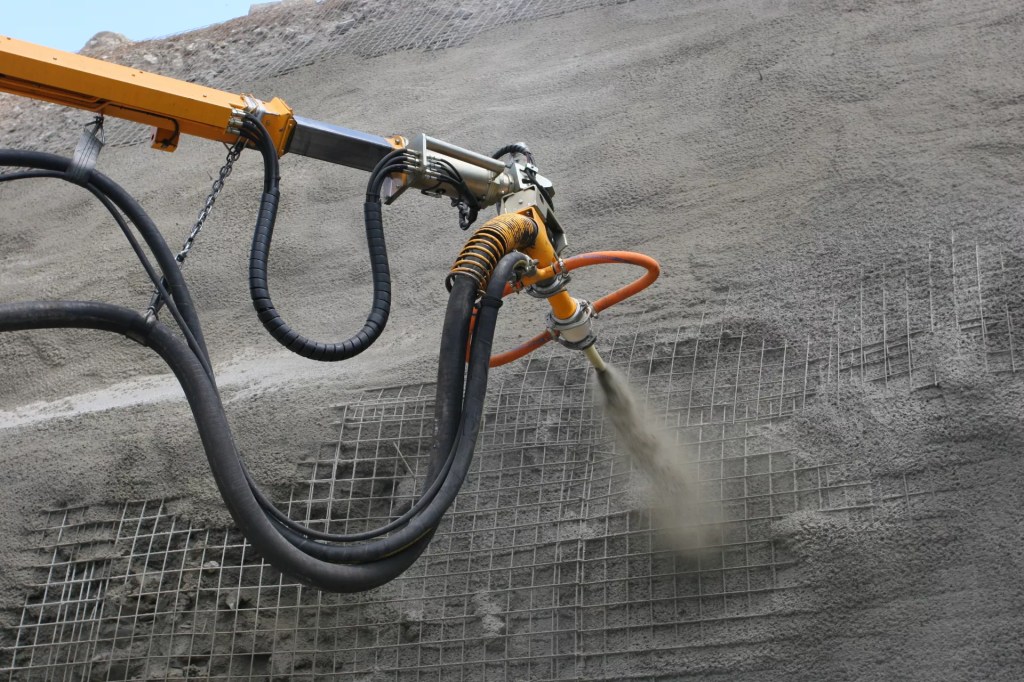
Shotcrete, a method of applying concrete through a high-pressure hose, has become a cornerstone in modern construction and engineering. This innovative technique, which involves spraying pre-mixed wet concrete onto surfaces at high velocity, offers unique advantages that make it indispensable in a variety of applications, particularly in the ground engineering sector.
The process of shotcreting begins with the preparation of a wet concrete mix, which is then pumped through a high-pressure hose. As the concrete reaches the nozzle, air is injected to increase its velocity, allowing it to be sprayed onto the desired surface with precision and force. This technique provides a highly effective way to apply concrete to irregular surfaces, vertical walls, or overhead structures where traditional pouring methods would be impractical or inefficient.
One of the key advantages of shotcrete is its versatility. It can be applied over conventional reinforcing bars or mesh, but it can also incorporate steel or synthetic fibers within the mix to enhance the structural integrity of the finished product. This adaptability makes shotcrete an ideal solution for a wide range of projects, from large-scale infrastructure developments like tunnels, bridges, and retaining walls to more specialized applications in slope stabilization and rockfall protection.
In the ground engineering sector, shotcrete has proven to be an invaluable tool. Its ability to be sculpted and colored allows for both functional and aesthetic applications, enabling engineers to create structures that are not only durable but also visually appealing. Companies like Specialized Ground Engineering have leveraged shotcrete’s capabilities to enhance the stability and safety of various projects, including mines, road and rail infrastructure, and complex slope stabilization initiatives. By combining shotcrete with other stabilization techniques, they can deliver robust solutions that meet the demanding requirements of modern construction.
Moreover, shotcrete offers significant advantages in terms of time and cost efficiency. The rapid application process reduces the time required for construction, leading to lower labor costs and shorter project timelines. Additionally, the material’s high strength and durability ensure a long service life, minimizing the need for future repairs or maintenance.
In conclusion, shotcrete is a highly versatile and efficient construction method that plays a crucial role in modern engineering. Its ability to be customized for different applications, combined with its time and cost-saving benefits, makes it an essential tool for a wide range of projects. As the demands of construction and infrastructure continue to evolve, shotcrete will undoubtedly remain a vital component in the toolkit of engineers and builders worldwide.
Shotcrete Applications
- Retaining/shoring walls
- Slope stabilisation
- Road and rail embankments
- Mine box cuts, portals and high walls
- Mine & tunnel underground roof support
- Dam spillways
- Detention tanks
- Sea walls
- In ground drain channels and culverts
- Simulated rock and block finishes/mock rock
- Ground engineering
 Specialised Ground Engineering