
Grouting
Pressure Cement Grouting
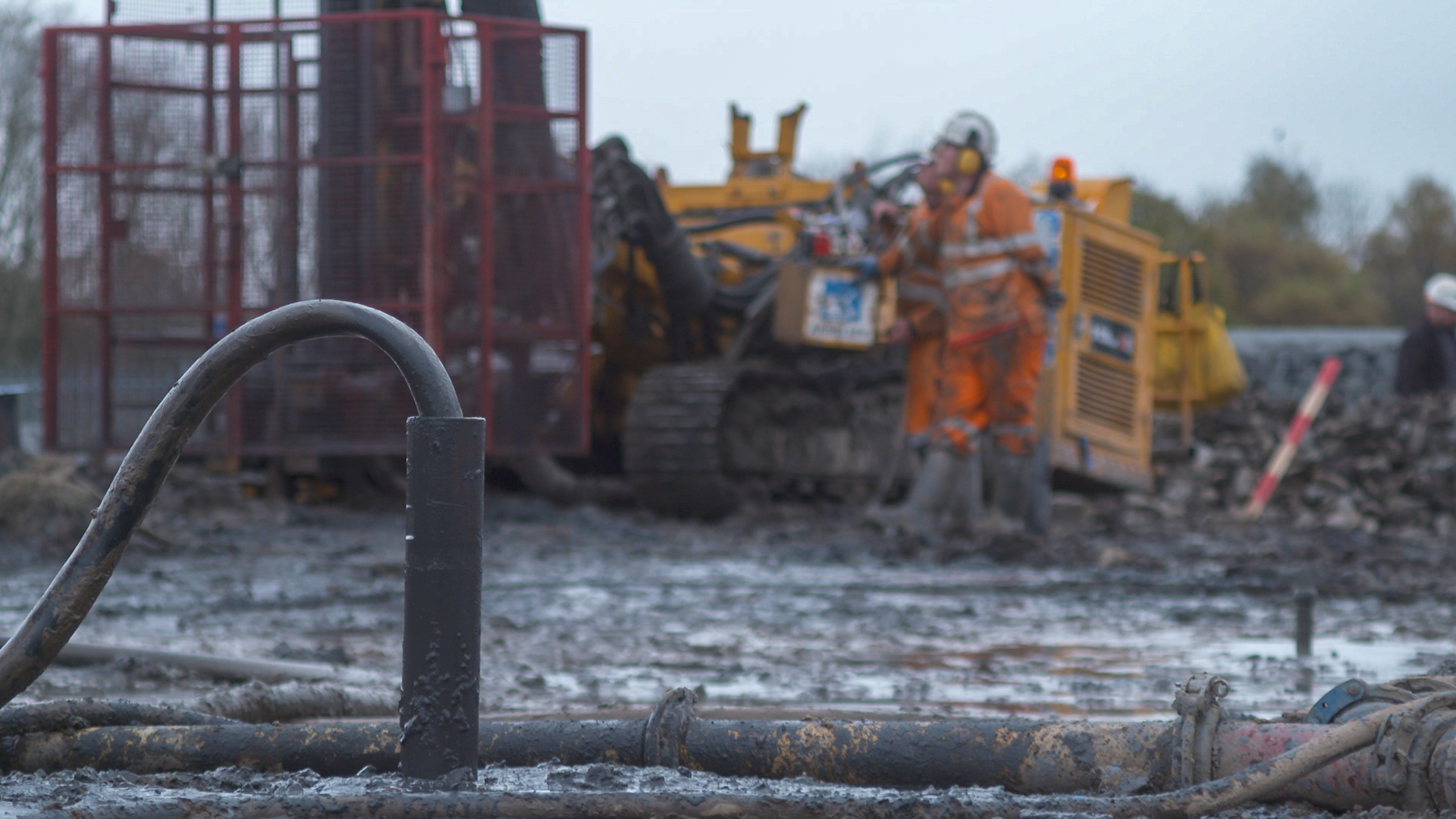
Pressure cement grouting is a vital technique in the field of civil engineering and construction, used to improve the structural integrity of buildings, stabilize the ground, and mitigate issues such as water infiltration and soil settlement. This process involves injecting a cementitious grout under pressure into voids, cracks, or porous areas within a structure or the surrounding soil. The grout then hardens, creating a dense, impermeable mass that enhances the overall strength and stability of the treated area.
The process of pressure cement grouting begins with the preparation of a grout mixture, typically composed of cement, water, and sometimes additives to modify its properties for specific applications. This mixture is then pumped under high pressure into the target area through a series of strategically placed injection points. The pressure forces the grout into the voids and cracks, filling them completely and displacing any water or loose material. Once the grout has cured, it forms a solid, durable mass that significantly improves the load-bearing capacity and waterproofing of the structure or soil.
One of the primary applications of pressure cement grouting is in the stabilization of foundations. Over time, buildings can experience settlement due to the movement of the underlying soil or the presence of voids and cavities. This can lead to structural issues such as cracks in walls and floors, uneven settlement, and, in severe cases, the risk of collapse. By injecting grout into the soil beneath the foundation, engineers can fill these voids and stabilize the ground, preventing further settlement and restoring the structural integrity of the building.
Another critical use of pressure cement grouting is in the repair and maintenance of concrete structures. Over time, concrete can develop cracks due to factors like thermal expansion, shrinkage, or structural stress. These cracks can allow water to penetrate, leading to corrosion of the reinforcing steel and weakening of the structure. Pressure cement grouting can effectively seal these cracks, preventing water infiltration and prolonging the life of the structure. It is commonly used in the repair of dams, bridges, tunnels, and other critical infrastructure.
In addition to its structural applications, pressure cement grouting plays a crucial role in ground improvement and soil stabilization. In areas with loose or unstable soils, the injection of grout can densify the soil, reducing its permeability and increasing its load-bearing capacity. This technique is particularly useful in the construction of underground tunnels, shafts, and other deep excavations, where ground stability is essential to the success and safety of the project.
Mini Jet & Jet Grouting
Jet grouting is an advanced ground improvement technique used to strengthen and stabilize weak or loose soils by injecting and mixing cementitious grout with the soil at high pressure. The process involves drilling a small-diameter rod into the ground and then using high-pressure jets of grout, water, or air to erode the soil and simultaneously mix it with the grout, creating solid, column-like structures known as soilcrete. These columns can be tailored in size and shape to meet the specific needs of a project, providing enhanced load-bearing capacity, reducing settlement, and forming impermeable barriers against water infiltration. Jet grouting is particularly effective in challenging conditions, such as beneath existing structures, in confined spaces, or in areas with complex soil profiles, making it a valuable tool in foundation support, excavation stabilization, and groundwater control.
Microfine Grouting
This method involves injecting a highly flowable grout made from microfine cement particles, which are much smaller than those found in conventional cement. These tiny particles allow the grout to penetrate tightly packed soils, fractures, and porous materials that standard grouts cannot reach. Once injected, the microfine grout hardens, forming a dense, durable mass that enhances the structural integrity of the treated area. Microfine grouting is particularly effective in applications where precise control and minimal disruption are required, such as sealing leaks in dams and tunnels, underpinning foundations, and stabilizing delicate historic structures. Its ability to permeate fine soils and small spaces makes it an essential tool for complex geotechnical and structural challenges.
Fracture Grouting
Fracture grouting, also known as compensation grouting, is a technique used to stabilize and strengthen weak or fractured ground by injecting grout into existing cracks or creating new fractures within the soil or rock. This method involves injecting a grout mixture under high pressure to open and fill fractures, which then harden to form a network of solidified material that increases the overall strength and stability of the ground. Fracture grouting is particularly useful in scenarios where the ground needs to be stabilized without causing significant surface settlement, such as near sensitive structures or in urban environments. It is commonly employed to control ground movement during tunneling operations, prevent subsidence, and reinforce foundations, ensuring that adjacent structures remain undisturbed and secure. The ability of fracture grouting to target specific areas with precision makes it a valuable technique for addressing complex geotechnical challenges.
Compaction Grouting
Unlike other grouting methods that permeate the soil, compaction grouting works by displacing and compacting the surrounding soil as the grout is injected under pressure. This creates a bulb or column of grout that compresses the adjacent soil, thereby increasing its load-bearing capacity and reducing settlement. Compaction grouting is particularly effective in stabilizing foundations, mitigating subsidence, and repairing sinkholes. It is often employed beneath existing structures to prevent or correct differential settlement without causing damage to the structure above. The ability of compaction grouting to improve ground conditions without extensive excavation makes it a preferred method in urban areas and around sensitive infrastructure.
 Specialised Ground Engineering