
Piling & Micropiling
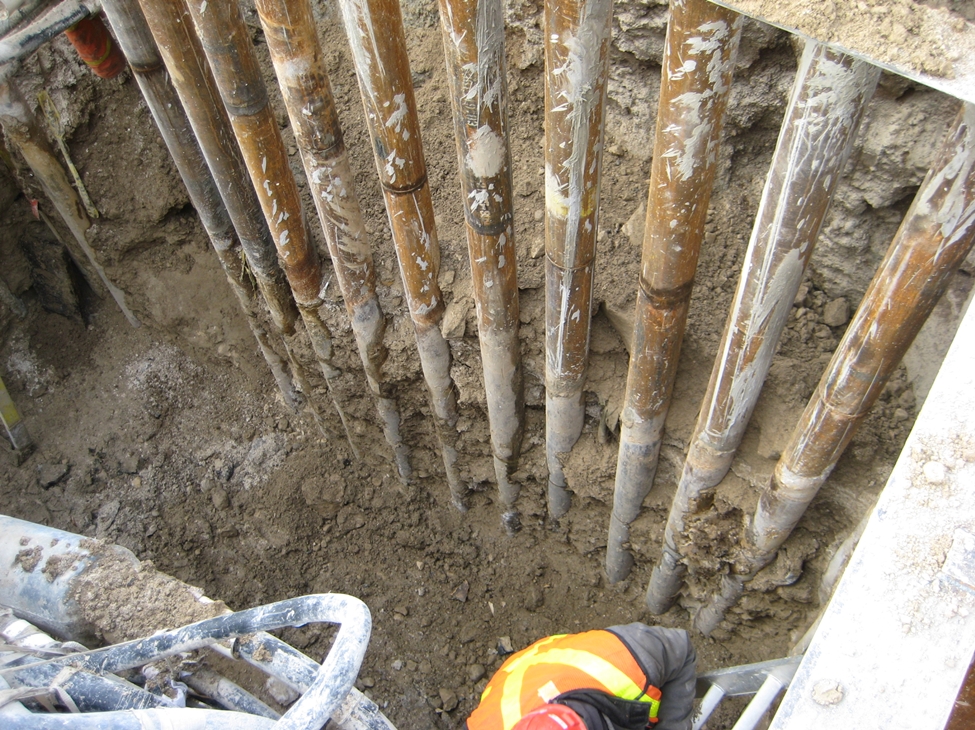
Bored Piles
Bored piles, also known as drilled shafts, are a type of deep foundation widely used in construction to support heavy loads and stabilize structures in challenging ground conditions. These piles are constructed by drilling a cylindrical hole into the ground, which is then filled with concrete, often reinforced with steel. Bored piles provide a reliable solution for transferring loads from structures to deeper, more stable soil or rock layers, making them essential in modern construction, especially for high-rise buildings, bridges, and other infrastructure projects.
The construction of bored piles begins with drilling a hole into the ground using specialized equipment such as augers or drilling rigs. The depth and diameter of the hole depend on the design requirements and the specific conditions of the site. In some cases, a temporary casing or drilling fluid is used to prevent the sides of the hole from collapsing during the drilling process, especially in loose or water-bearing soils. Once the hole reaches the desired depth, a reinforcing cage made of steel bars is often placed inside the hole to provide additional structural strength. Finally, concrete is poured into the hole, filling it from the bottom up and encasing the reinforcement to form a solid pile.
Bored piles offer several advantages over other foundation methods, particularly in complex or challenging ground conditions. One of the primary benefits is their ability to be constructed in a wide range of soil types, from soft clay to hard rock. Unlike driven piles, which are hammered into the ground and can cause significant vibration and noise, bored piles are drilled, making them a quieter and less disruptive option, particularly in urban areas or near sensitive structures. This makes bored piles ideal for projects where minimizing environmental impact and avoiding disturbance to nearby buildings is crucial.
Another significant advantage of bored piles is their adaptability. The size, depth, and load-bearing capacity of bored piles can be easily adjusted to meet the specific needs of a project. This flexibility allows engineers to design foundations that are tailored to the unique conditions of each site, ensuring optimal performance and stability. Additionally, bored piles can be used in combination with other foundation types, such as pile caps or raft foundations, to provide further support for structures with exceptionally high load demands.
Bored piles are also particularly effective in sites with variable soil conditions, where the bearing capacity of the ground may change significantly with depth. By reaching deeper, more stable soil or rock layers, bored piles can bypass weaker, less stable soils, providing a secure foundation that is less prone to settlement or shifting. This is especially important in regions with high seismic activity, where ground movement can pose a significant risk to the integrity of a structure.
Despite their many advantages, the construction of bored piles requires careful planning and precise execution- Specialised Ground Engineering has advanced equipment and significant experience within this process. The drilling process must be meticulously controlled to avoid deviations from the intended pile alignment, and the quality of the concrete must be carefully monitored to ensure the pile’s strength and durability. Additionally, in cases where groundwater is present, proper measures must be taken to prevent water from entering the borehole and compromising the integrity of the pile.
In conclusion, bored piles are a versatile and effective foundation solution that plays a crucial role in modern construction. Their ability to support heavy loads, adapt to various soil conditions, and minimize environmental impact makes them an essential tool for engineers and builders. As urban development continues to expand and construction projects become increasingly complex, the importance of bored piles in providing safe and stable foundations will only continue to grow, ensuring that our buildings and infrastructure can withstand the challenges of time and nature.
Continuous Flight Auger
Continuous Flight Auger (CFA) piles are a modern and efficient deep foundation solution designed to support structures in various ground conditions. This method involves using a continuous flight auger—a large, helical screw-like device—to drill a cylindrical hole into the ground. Unlike traditional piling methods, CFA piles are installed without the need for temporary casings, making them particularly effective in soils prone to collapse or in environments where minimizing disturbance is crucial.
The construction process for CFA piles begins with the deployment of the continuous flight auger, which is rotated into the ground to drill a hole of the required diameter and depth. As the auger advances, it brings soil to the surface, and the hollow shaft allows for the continuous extraction of material. Once the desired depth is reached, the auger is withdrawn slowly while simultaneously injecting concrete under pressure through the hollow auger. This method ensures that the concrete fills the entire hole, encasing any embedded reinforcement, which can be added if necessary. The result is a solid, continuous pile that provides excellent load-bearing capacity and ground stability.
One of the primary advantages of CFA piles is their ability to be installed in a wide range of soil types, from loose sands to stiff clays. The continuous flight auger method minimizes soil disturbance compared to other piling techniques, reducing the risk of ground settlement and vibration-related damage to nearby structures. This makes CFA piles especially suitable for urban environments or areas with sensitive infrastructure, where maintaining structural integrity and minimizing disruption are essential.
Another significant benefit of CFA piles is their efficiency in both installation and construction. The method allows for rapid pile installation, with minimal equipment required on-site, which can lead to reduced construction time and lower costs. Additionally, the continuous nature of the auger helps to ensure that the pile’s diameter and depth are consistent, leading to more predictable and reliable load-bearing performance.
CFA piles also offer flexibility in design and application. They can be used in combination with other foundation types, such as pile caps or raft foundations, to address specific structural needs. The ability to adapt to various soil conditions and load requirements makes CFA piles a versatile choice for a wide range of projects, including residential buildings, commercial structures, and infrastructure developments.
However, the success of CFA pile installation relies on careful monitoring and quality control throughout the process. Ensuring that the auger maintains proper alignment and that the concrete is properly mixed and pumped is crucial to achieving the desired pile performance. Additionally, the presence of groundwater or loose, saturated soils can pose challenges that require careful management to avoid potential issues such as concrete contamination or pile instability.
Continuous Flight Auger piles represent a sophisticated and effective approach to deep foundation construction. Their ability to provide strong, stable support in various soil conditions, coupled with their efficiency and minimal environmental impact, makes them a valuable tool in modern construction practices. As projects become increasingly complex and urban areas continue to develop, the role of CFA piles in delivering reliable and cost-effective foundation solutions will continue to be essential.
Driven Steel
Driven steel piles are a robust and widely used foundation solution known for their strength and durability. Constructed from steel sections, typically I-beams or H-sections, these piles are installed by driving them into the ground using a pile hammer or impact driver. The driving process involves applying a series of rapid blows to the top of the pile, which drives it deep into the soil until it reaches a layer of sufficient bearing capacity. Driven steel piles are particularly effective in dense soils or rock formations, where they provide exceptional load-bearing performance and resistance to settlement. Their high strength-to-weight ratio makes them suitable for supporting heavy structures, including high-rise buildings and bridges. Additionally, the installation of driven steel piles is relatively quick and straightforward, contributing to faster project completion. However, this method can generate significant noise and vibration, which may need to be managed, especially in urban or sensitive areas. Despite this, the reliability and efficiency of driven steel piles make them a popular choice for a wide range of foundation applications.
Screw Piles
Screw piles, also known as helical piles, are a modern and efficient foundation solution characterized by their unique installation method and adaptability to various soil conditions. These piles consist of a central shaft with one or more helical plates or “screws” attached to the end. The installation process involves rotating the screw pile into the ground using specialized machinery, which drives the pile to the desired depth while simultaneously creating a stable bearing capacity through the helical action. This method not only minimizes soil displacement but also ensures a high load-bearing capacity, making screw piles ideal for supporting structures in both cohesive and non-cohesive soils.
One of the primary advantages of screw piles is their rapid installation and the reduced environmental impact compared to traditional piling methods. The helical design of the pile allows for quick penetration into the ground, often without the need for pre-drilling or extensive excavation. This results in lower noise and vibration levels during installation, making screw piles a suitable choice for urban and residential projects where minimizing disruption is essential. Additionally, screw piles can be installed in a variety of ground conditions, including areas with limited access, rocky terrains, or sites with high water tables.
Screw piles also offer significant flexibility and precision in foundation design. Their load-bearing capacity can be easily adjusted by varying the number and size of the helical plates, allowing engineers to tailor the piles to meet the specific needs of a project. Furthermore, screw piles can be installed both vertically and at an angle, accommodating various structural requirements. This adaptability makes them an attractive option for a wide range of applications, from supporting new construction projects to reinforcing existing structures and even in temporary installations. Overall, screw piles represent a versatile and efficient solution for modern construction challenges, combining speed, minimal environmental impact, and design flexibility.
 Specialised Ground Engineering